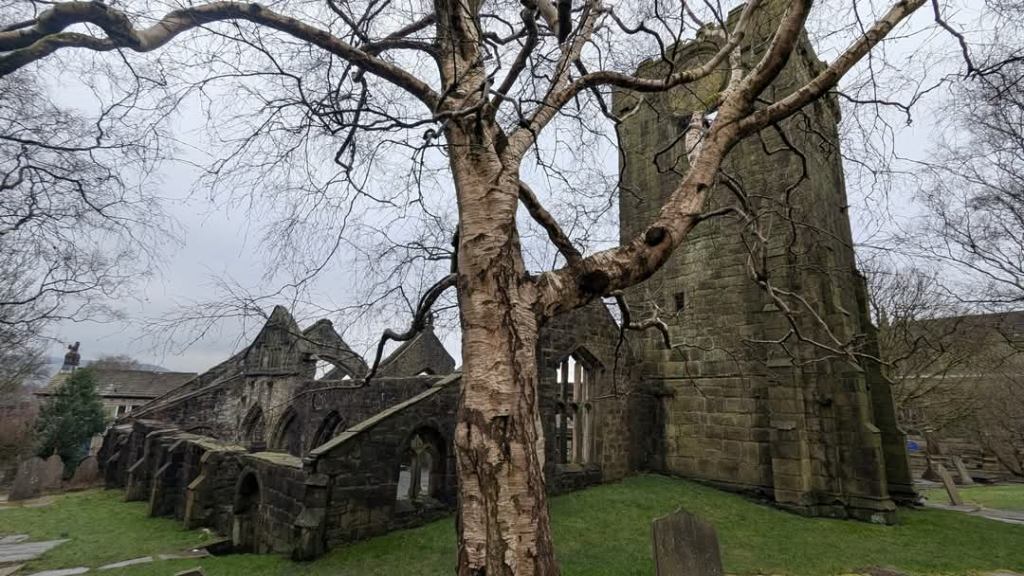


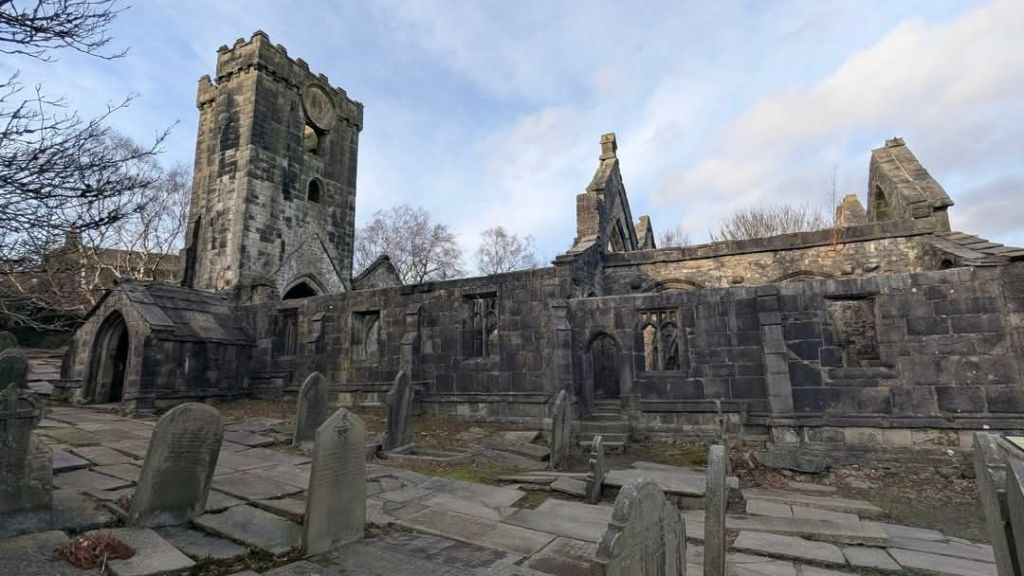
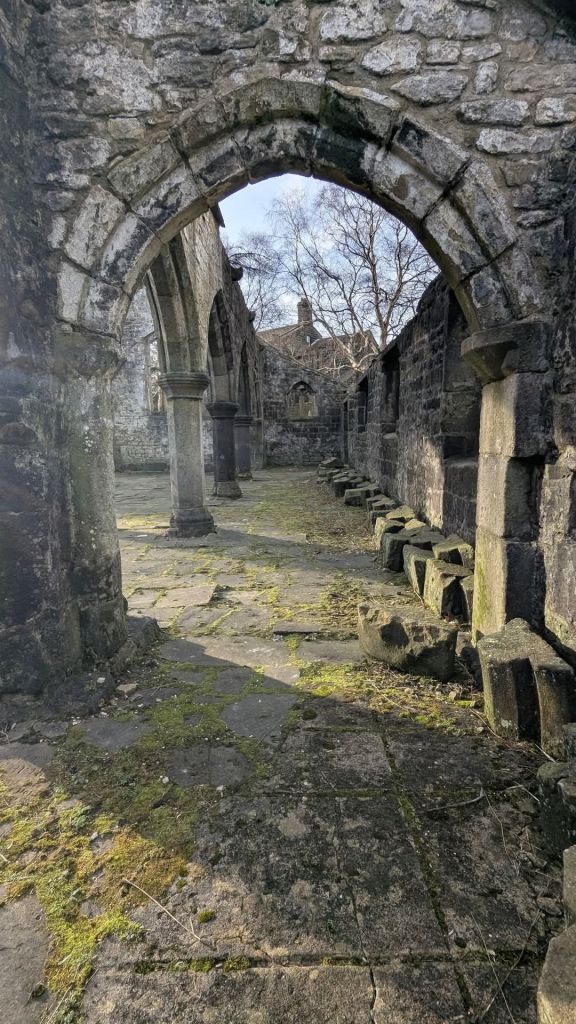

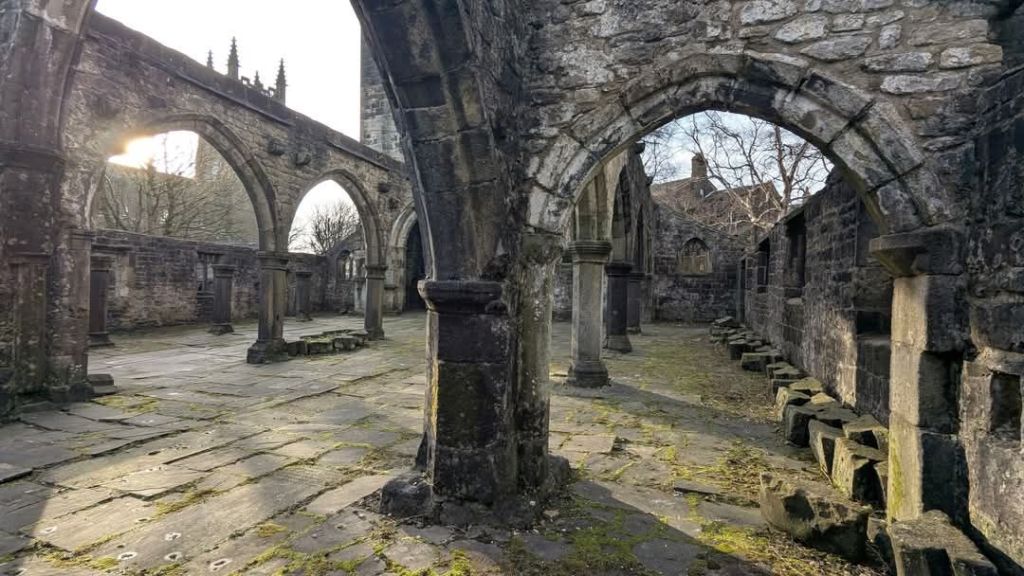

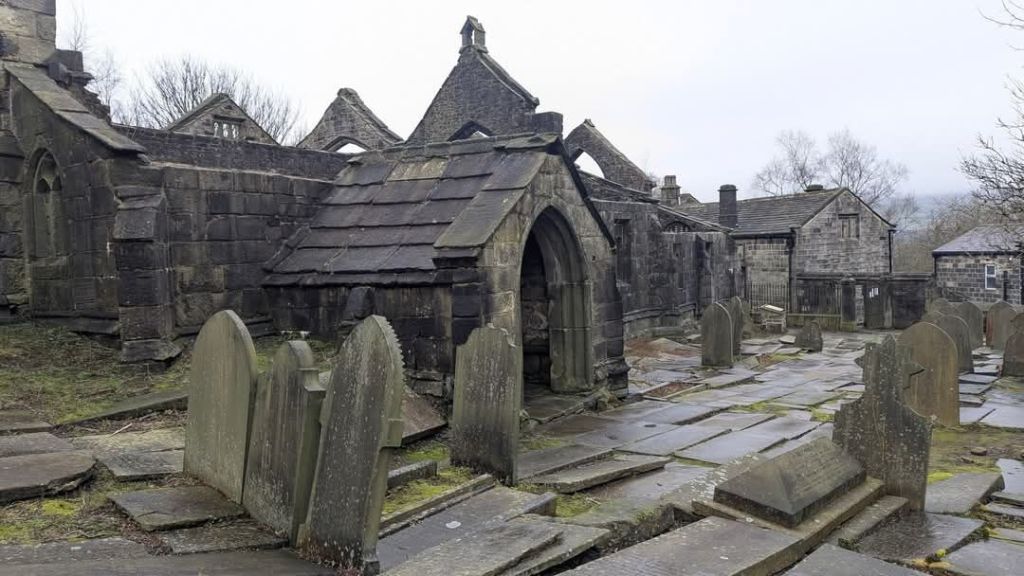
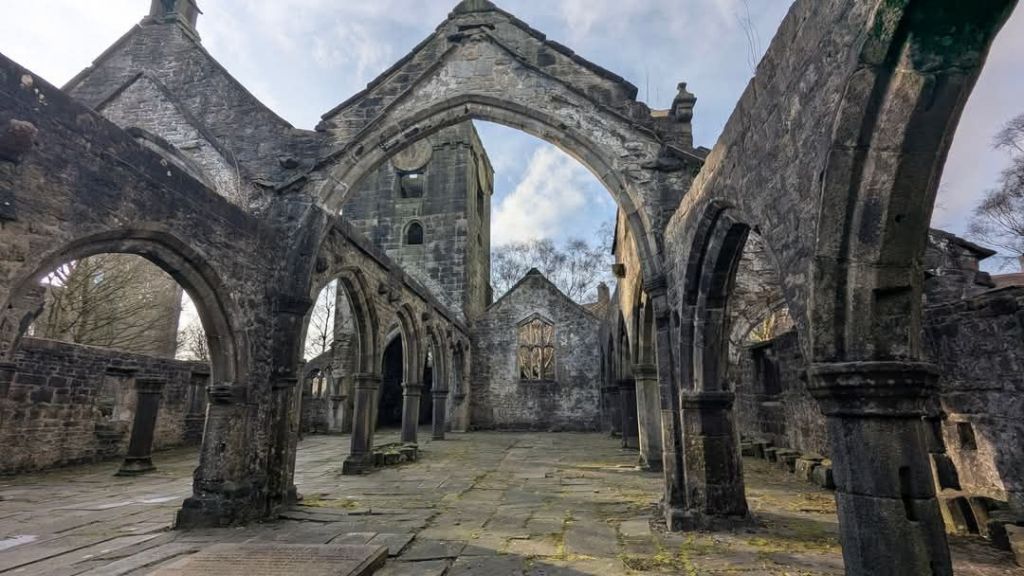
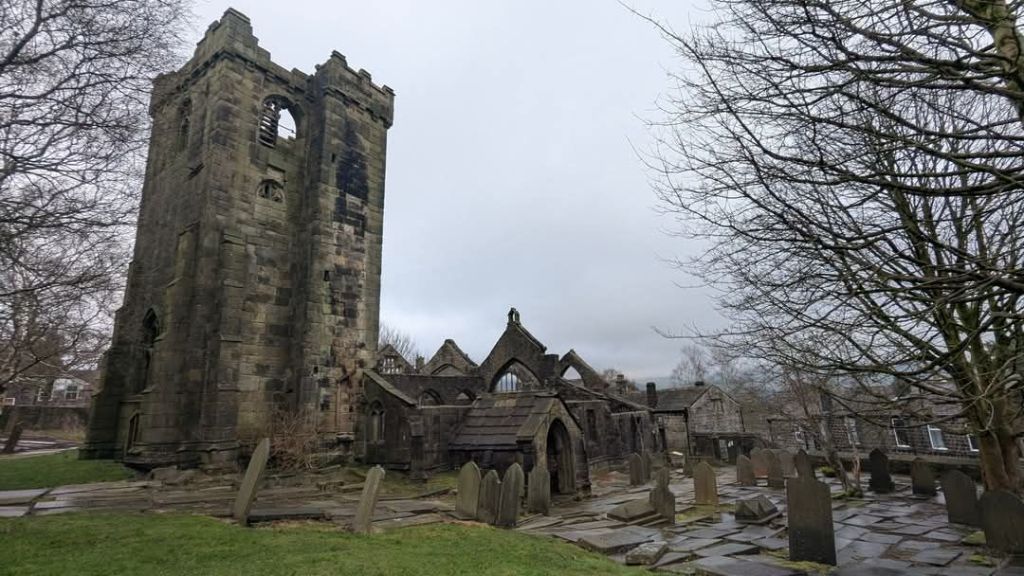
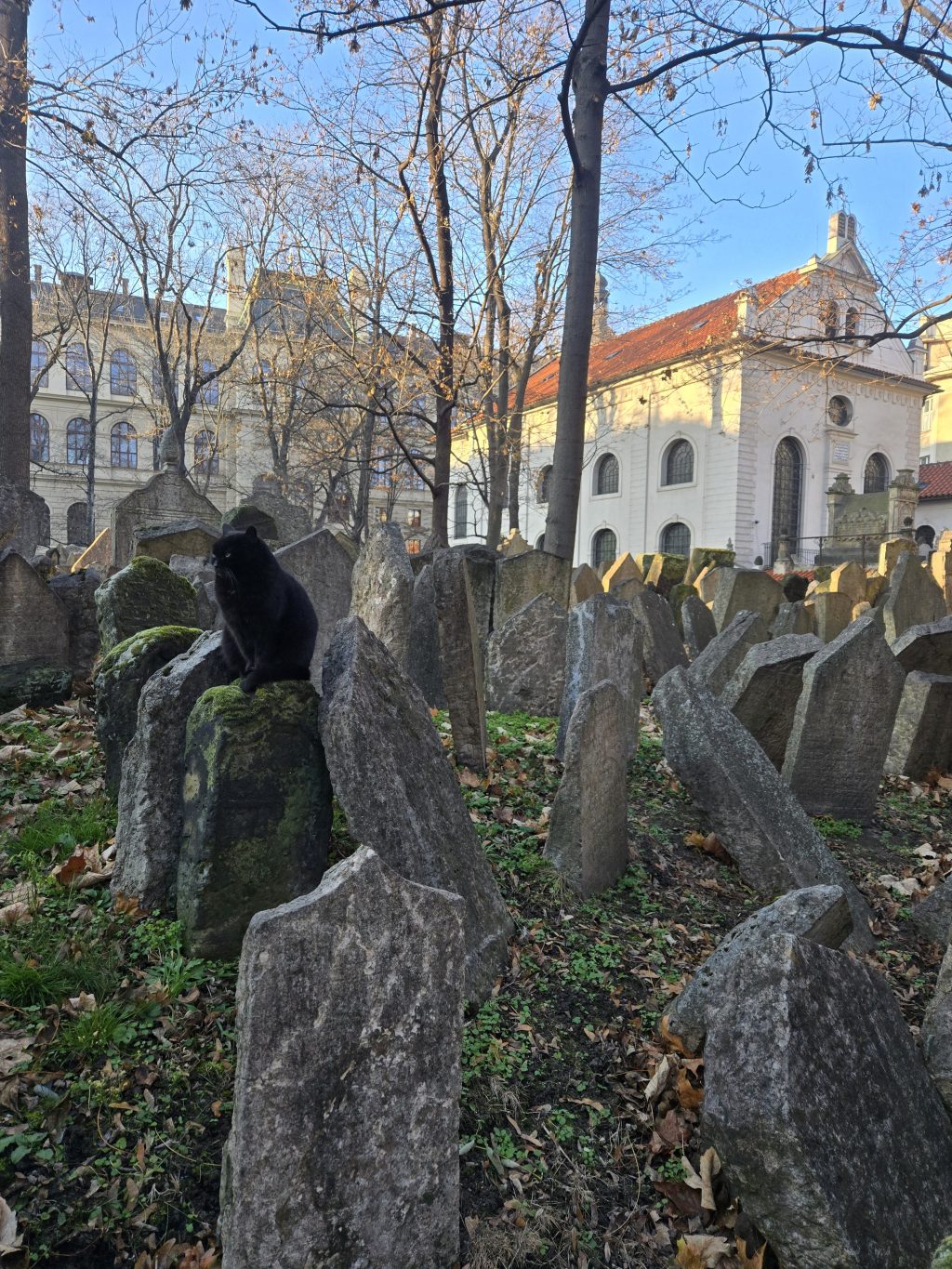
These mystical ruins are at the heart of Heptonstall, one of the Pennines’ most historic villages. At the centre of the village are the ruins of the Church of St Thomas a’ Becket. Walking to these ruins was literally like walking over a prescient of graves, which are uneven due to tree roots pushing up through them in different directions.
History
It was originally constructed between 1256 and 1260 deliberately squat to withstand the hilltop storms. John Wesley (Who originally is from the next village to me actually) the founder of Methodism and a regular visitor of the church described it as the ugliest church he had visited. Ultimately the church proved no match for the elements and in 1847 it was shattered by a storm; the building was abandoned and a new Church built alongside.
The ruin is so densely packed with the Dead that it central feature resembles a skeleton adrift on the sea of Gravestones. It said that over 100,000 (Not quite sure about that but there definitely is a large number!) people are buried there most notorious King David Hartley, executed chief of the Cragg Vale coiners. At the southern perimeter of the churchyard the upper Storey of the old Cottage backs onto its elevated Precincts. The building was formerly the cemeteries ossuary – where old human remains, unearthed during the course of subsequent burials, were deposited.
The structure is dated 1779 and at some point it was presumably deconsecrated and turned into a private residence, albeit one whose macabre history was preserved in the fabric. During renovation work conducted by Jack Smith in 1965, all manner of sepulchral detritus was all uncovered: Fragments of tombstone has been incorporated into the walls, two grave slabs served as window sills and a staircase was found to have been constructed from coffin lids.
Meanwhile, human remains abounded – shards of bone seem to come blossoming from cracks in the masonry or beneath paved floors. The refurbishments also revealed a blocked doorway, beyond which a room had lain undisturbed for many years.
👻 Haunted 👻
It was the ensuing restoration that served as a catalyst for a haunting. Perhaps a supernatural presence had caused that chamber to be sealed originally, or perhaps structural alterations invoked something dormant within the stone. Both Jack Smith and his contractors reported seeing an apparition, although they witnessed only its feet, sandals and tunic. Such garb loosely suggested an ecclesiastic of the old religion, the phantom was promptly dubbed as monk by local commentators.
With such an abundance of corpses in both the structure and immediate vicinity, speculation as to the identity of it’s ghost seems an unsuperable task. Nonetheless, there is at least one historical episode and attendant oral tradition that may be significant. An entry in the registers of the Archbishop of York records that in December 1482, the church at Heptonstall was temporarily closed for restoration after having been polluted by an effusion of blood.
Village legend maintains that the spilt blood belong to a parish priest, murdered in the church by the disapproving father of the bride who secret wedding the unfortunate cleric had just consecrated.
Simon Wilson





 Paranormal Hauntings
Leave a comment